
Idea
An artisan bakery and cafe brand
Picture the name on the counter, the takeaway bag and the ordering page.
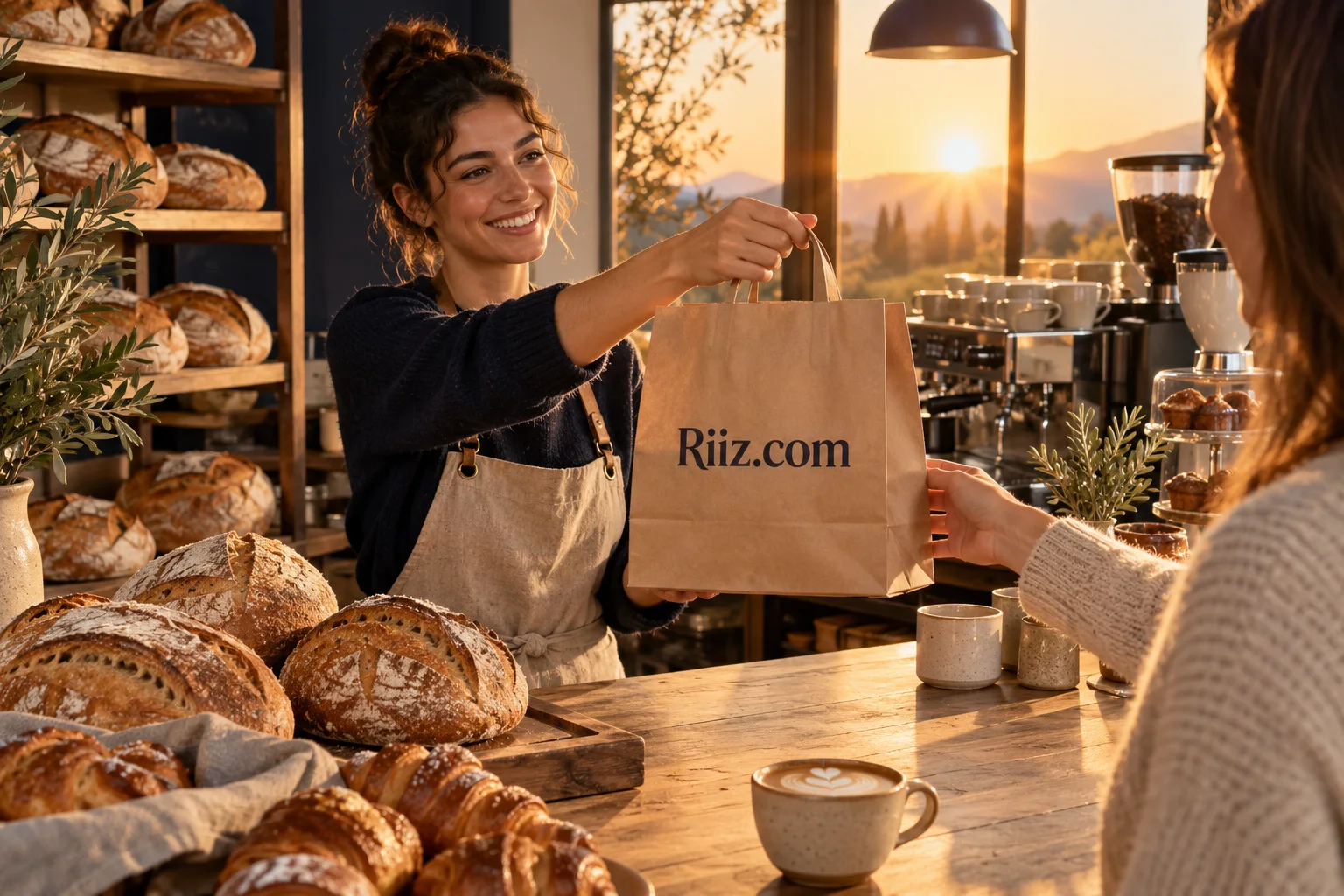
A bakery name is encountered at street level, in a conversation and on the bag someone carries home. Riiz could give those moments a shared identity without naming a particular ingredient or baking style. A clear bakery or cafe descriptor would tell a first-time visitor what is offered. This concept is illustrative: no location, menu or trading business is being offered with the domain.
Begin with the service you want to run
A takeaway bakery and a sit-down cafe can share products while demanding very different daily routines. Decide which experience comes first. If the core offer is bread and pastries collected on the way to work, ordering hours and pickup clarity should shape the website. If guests are expected to stay, information about the space and available service becomes more important.
Riiz could sit above either offer as a house name. It does not establish a culinary tradition or tell a customer what a loaf tastes like. Those associations would come from the menu, the product and repeated visits. A founder should be comfortable doing that explanatory work rather than expecting four letters to communicate a complete food proposition.
Test the name where people see it
Place the wordmark on a simple storefront study and view it from the distance of a passerby. Then try it on a small bag seal and a cup sleeve. Keep the address legible where someone might want to find opening hours later. The repeated i should remain clear when a design is reproduced on textured paper or curved packaging.
Packaging also carries useful information. A product label may need ingredients, storage guidance and other details appropriate to the item and market. Leave room for that material from the beginning. A large decorative mark that crowds out necessary information is an expensive design problem to discover after packaging has been ordered. Work with qualified local advisers on applicable labeling requirements.
Make the first online visit practical
The homepage of a future Riiz bakery could put the current offer and ordering method before a long origin story. Someone deciding where to buy breakfast is likely to need concrete details. Explain what can be ordered, when it can be collected and how changes or cancellations are handled. If the menu changes, give staff a workable way to keep the online version accurate.
A product photograph should represent what the business actually prepares. Describe sizes and options in consistent terms, and avoid making health or nutritional promises without appropriate support. If an item is unavailable, the ordering flow should say so before a customer commits. Good information is part of the service, especially when a person is ordering for somebody else.
Connect the counter and the pickup page
Walk through a hypothetical order from the customer's perspective. They select an item, choose an available collection time and receive instructions. On arrival, they need to know where to go and what identifies their order. The name and address should match across each step so that the experience feels connected rather than assembled from unrelated systems.
The business would also need a plan for mistakes. A wrong pickup time, a missing item or a changed opening schedule should have a clear resolution path. Write those instructions before opening orders. The domain can provide a stable home for the information, but fulfillment depends on the people and systems behind the counter. A naming decision cannot replace that work.
Leave room for packaged products
If the long-term plan includes coffee or other packaged goods, assess how the identity would appear away from the original premises. A bag on a shop shelf must explain itself without a staff member nearby. Riiz could remain the main name while the product descriptor, variety and preparation information do the detailed work. Test whether a customer can distinguish related products quickly.
Expansion should follow an operational reason. A cafe may discover demand for something customers already enjoy on site, but that does not automatically make shipping or wholesale suitable. Shelf life, packaging and order handling introduce separate requirements. Treat each proposed channel as a business decision, even if the same name can fit comfortably across all of them.
Give the name a useful verbal introduction
A customer may first hear Riiz from a friend. Decide how staff would say it and how the address would be spelled aloud. An invented name with a doubled vowel benefits from a consistent introduction. Test that introduction with people who have not seen the logo, then ask them to type what they heard. Their responses can reveal where clarification is needed.
Do the same exercise with the full business description. If people assume a different type of venue, the descriptor or photography may need attention. This is a practical check, not a contest to find a name that everyone likes. The useful question is whether the intended audience understands the offer and can find it again after a brief encounter.
Consider the domain alongside the opening plan
A founder exploring this direction can bring the intended format, market and packaging plans to an inquiry. An existing food business considering a shorter address should also identify where its current name appears, including signs and ordering confirmations. That inventory helps separate the acquisition decision from the later work of changing the customer experience.
Any domain transaction would be discussed separately from premises, recipes, equipment or operating permissions. Visual materials shown here illustrate a possible identity rather than a ready-to-open cafe. If Riiz fits the business being planned, the next step is to describe that business and ask the questions needed to assess the domain on its own terms.